A mining robot can be worth more as a service than as a product. The strongest business openings sit around remote operation, machine upkeep, site data, and safety work that mines already need.
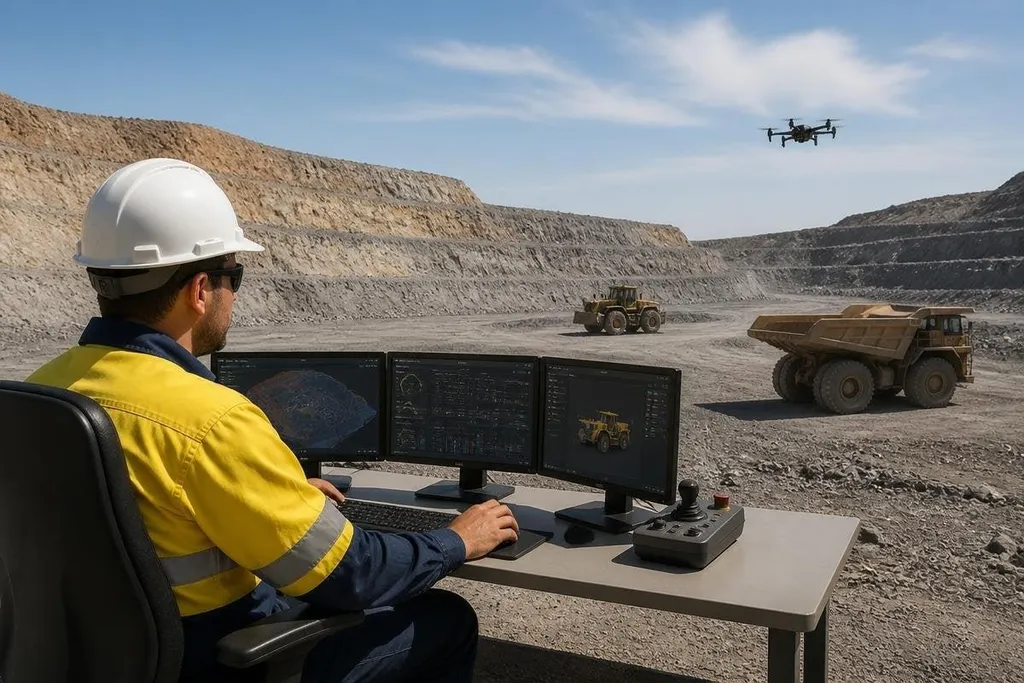
- Remote drilling can move operators away from unstable work areas.
- Machine vision and LiDAR can inspect walls, vehicles, and tunnels.
- Service contracts may matter more than the robot sale.
Where the work starts
Mining sites have several jobs that suit robots because the work is repetitive, hazardous, or far from a control room. Drilling, hauling, mapping, inspection, and stockpile measurement all create possible uses for autonomous systems.
One narrow task gives a robot a clearer sales case than a general machine. A drilling system can follow a planned path, monitor its position, and send data to an operator. Inspection robots can carry cameras, thermal sensors, or LiDAR. LiDAR measures distance with laser pulses.
That detail matters to a mining company because the buyer can link the system to one job. The vendor can then measure metres drilled, areas inspected, downtime avoided, or alerts found. A vague promise about automation is harder to approve than a task with a clear record.
The service business around the robot
The machine is only one part of the sale. A mine also needs site mapping, network links, software updates, spare parts, operator training, and repairs. Those needs create room for companies that don't build the robot itself.
Remote operation is one example. A control-room operator may supervise several machines, but that setup needs video feeds, data links, alerts, and a safe way to stop equipment. A company that connects those pieces could sell setup work first, then charge for support at each site.
Data creates another opening. When a robot records tunnel walls or haul roads, it produces a stream of images and measurements.
Software can sort those records, flag a change, and send the result to a human who decides what to do next. The software must show why it raised an alert; mine staff can't act on a black-box warning.
A mine’s costs change when a robot needs a remote operator for every stop. Mining robotics coverage from Robot24.com puts the site, task, staffing plan, and trial date beside any claimed saving. Those details give a buyer a fair starting point for the checks that follow.
What mining buyers will check
Mining equipment runs in dust, heat, vibration, darkness, and areas with weak network coverage. A robot that works in a clean test area may need different sensors, shielding, and recovery steps underground.
The buyer will also ask who takes control when the system loses its position. That question reaches into software, radio links, emergency stops, worker training, and site rules. A vendor needs a clear answer before a robot enters a working area.
Integration can cost more than the first machine. The robot may need to connect with fleet software, dispatch systems, maintenance records, and existing radio equipment. A business that handles those connections can earn a place in the project, but it also carries more responsibility when the system fails.
The strongest opposing view is that mines may prefer proven equipment and skilled operators over new robots. That concern has weight, so early suppliers should sell a narrow task with a clear fallback, rather than ask a mine to replace an entire process.
A practical decision guide
Use these checks before building or buying a mining robot service:
- Name the task: Write down the job, its current steps, and the point where people face danger or lost time.
- Set the handoff: Decide when a remote operator takes control and what happens after a lost connection.
- Check the site: Record dust, heat, light, terrain, network coverage, and vehicle traffic before choosing sensors.
- Count the service work: Include training, parts, software updates, data storage, repairs, and site visits in the price.
- Keep a fallback: Plan a manual process for sensor faults, blocked routes, bad maps, or a stopped robot.
- Pick the proof: Agree on one measure, such as inspection coverage or machine uptime, before the trial begins.
The business case comes first
Mining robotics companies can earn money from machines, software, remote operations, integration, and long-term service. The buyer still needs a task with a clear measure and a safe fallback.
I'd start with inspection or remote drilling, where the work can be divided into defined steps and checked against site records. The next business question is simple: which mining task can a robot perform repeatedly, with a human ready to take control when the data stops making sense?